The Myth of: Zipacna, the "Maker of Mountains"
The Architect of Vanity: The Fall of Zipacna "I am the Maker of Mountains," declared the titan Zipacna to a world still draped in primordial mist. But as the K'iche' Maya records of the Popol Vuh reveal, strength without substance is merely a monument to its own ruin. In this installment of the Chelstonomythos, we witness the eldest son of Seven Macaw—a creature who treated the crust of the earth as clay for his ego. From his effortless lifting of the four hundred youths' massive pillar to his calculated slaughter of those who sought to bury him, Zipacna walked a path of tectonic arrogance. Yet, as every titan eventually learns, the universe is a patient auditor. Follow the Hero Twins, Hunahpu and Xbalanque, as they craft a final reckoning for the giant. See how a single, artificial craving led the "Maker of Mountains" to be crushed by the very stone he claimed to master, proving that when the external glitter of power is stripped away, only the hollow weight of hubris remains.
Ryan Chelston
5/3/20262 min read
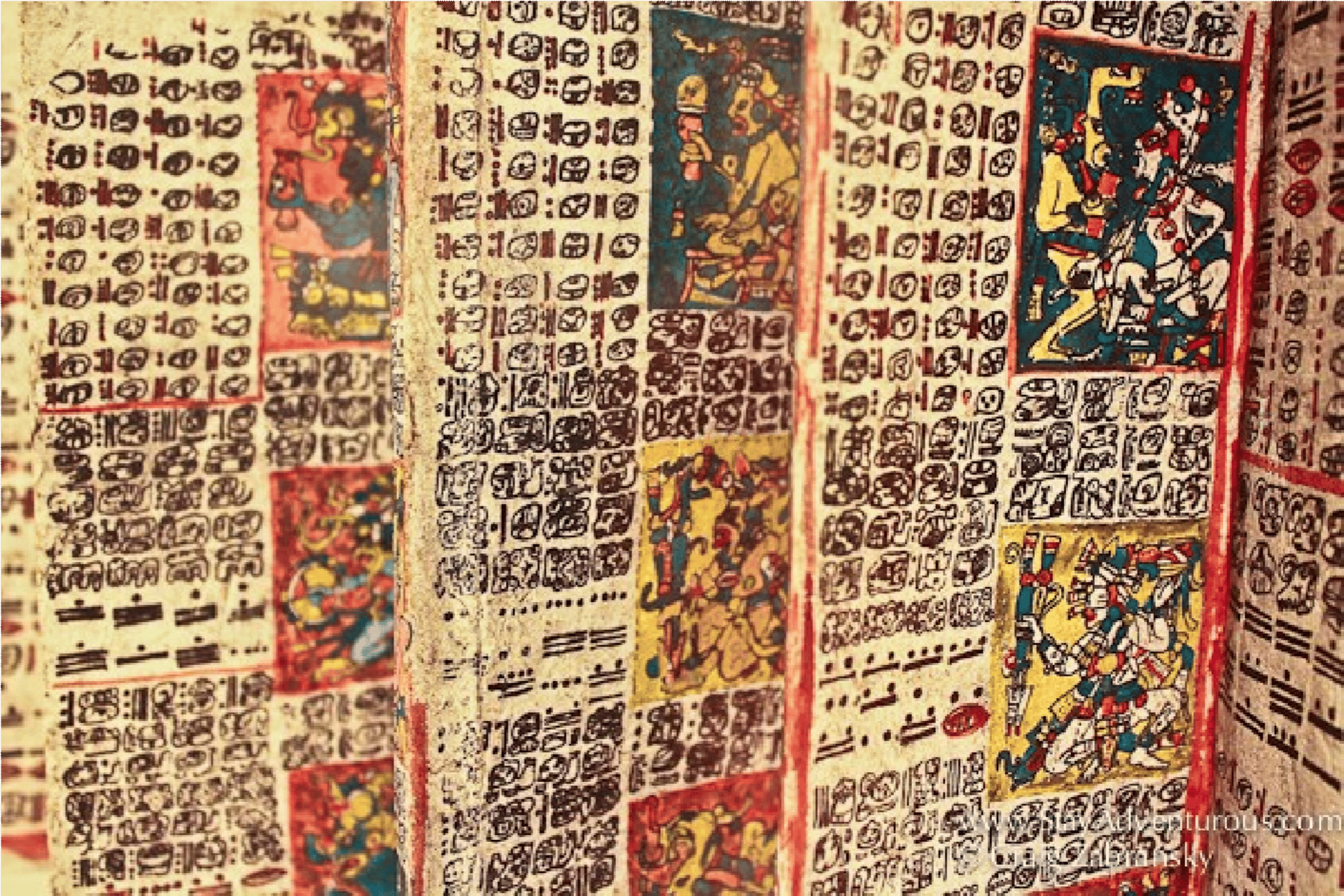
Before the sun stood in his station, the earth was a vast and formless waste, a theater of mist where shadows walked as men. In this gray dawn rose Zipacna, the first-born of Seven Macaw. He did not merely walk the earth; he sought to master it through the labor of his vanity. 'I am the Maker of Mountains,' he declared to the void, and with his own hands, he piled the heavy stones and cast the great volcanoes into the sky. But his strength was a barren thing, for he built not for the world, but for the echo of his own name.
The Conflict of the Four Hundred
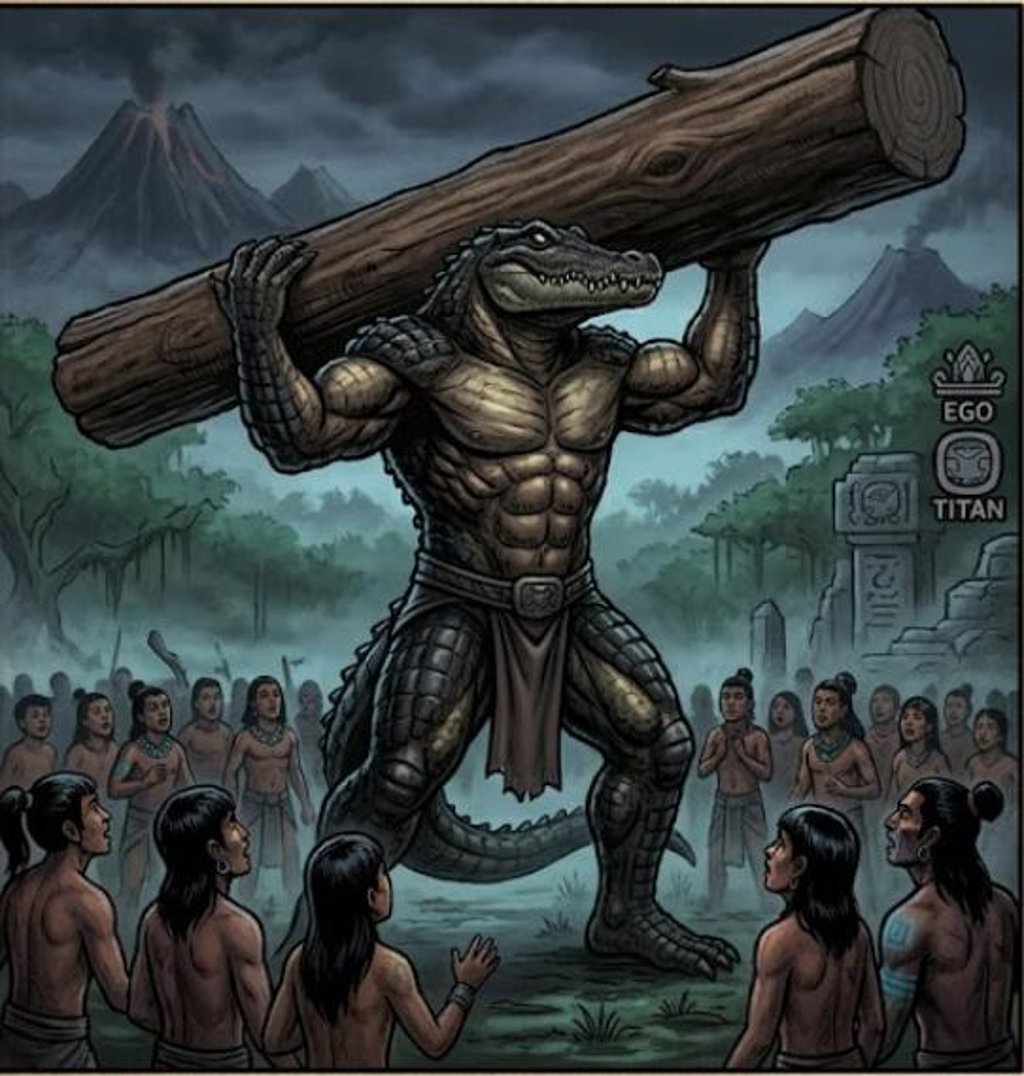
It happened that four hundred youths labored to drag a massive pillar, the spine of a new house they sought to raise. Zipacna, draped in his own arrogance, approached them and hoisted the timber alone, carrying it with a strength that defied the gods. The youths looked upon him and saw a monster of appetite, a creature too great for the order of things. They plotted his end, bidding him dig a deep pit for their foundation, intending to cast the pillar down and crush the breath from his lungs.
The Subterranean Deceit
But the Titan was as subtle as the roots of a tree. He carved a sanctuary into the side of the earth, hiding while the timber crashed above him. To deceive his executioners, he sent forth the ants, bearing locks of his own hair and parings of his nails as false evidence of his ruin. The four hundred celebrated their victory with wine and song, blinded by the belief that the giant was slain. As they lay in a drunken stupor, Zipacna rose from the depths and brought the house down upon them, extinguishing their lives in a single stroke.
The Final Reckoning
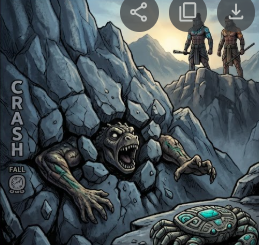
Fate, however, is a patient auditor. The Hero Twins, Hunahpu and Xbalanque, saw that Zipacna could not be broken by force, but only by the weight of his own hunger. They fashioned a great crab of earth and stone, a gleaming lure placed deep within a narrow crevice of the mountain. Driven by a ravenous pride, Zipacna squeezed his vast frame into the stone throat of the world. As he reached for the prize, the very mountains he claimed to have forged collapsed upon him. He was not merely buried; he was turned to stone, becoming a silent monument to the earth he tried to possess.
The Close
Zipacna forgot that while a man may move the earth, he can never truly own it. He remains there still—a pillar of pride, pinned by the foundation of his own hubris.
Until next time... the books... are closed.
Submitted for the approval of the Chelstonomythos Society, I present to you...
The Architect of Vanity
The Fall of Zipacna